

Anti-Theft Bag for Women Traveling to Europe: What to Look For (2026)
Barcelona tops the list of Europe's most pickpocket-prone cities — followed closely by Rome, Paris, and Prague. In these destinations, skilled thieves target distracted tourists in crowded metro stations, outdoor markets, and tourist queues. The difference between a stressful trip and a smooth one often comes down to one decision: what bag you carry.
But "anti-theft bag" has become a marketing buzzword, and not every bag that claims the label deserves it. This guide cuts through the noise. You'll learn what features genuinely protect you, which ones are just for show, and what to look for in an anti-theft bag for women traveling to Europe — whether you're spending two weeks hopping between cities or a long weekend in one place.
The short answer: A true anti-theft travel bag combines slash-resistant construction, RFID-blocking pockets, hidden access points, and lockable zippers — in a style that doesn't scream "tourist." Any bag missing more than one of these is making a partial promise.
The Real Pickpocket Risk in Europe
Understanding what thieves actually do helps you choose the right defense. In Europe, the most common techniques aren't dramatic heists — they're quiet, fast, and rely on distraction.
| City | Risk Level | Common Method |
|---|---|---|
| Barcelona (La Rambla, Metro) | Very High | Distraction teams, slash-and-grab |
| Rome (Colosseum, Trevi Fountain) | Very High | Crowded tourist sites, fake surveys |
| Paris (Eiffel Tower, RER B) | High | Metro rush hour, card skimmers |
| Prague (Old Town Square) | High | Crowded pedestrian areas |
| Amsterdam (Central Station) | Moderate | Bike theft, bag-snatching on streets |
| Lisbon (Tram 28, Alfama) | Moderate | Packed trams, tourist trails |
The methods reveal what you need to defend against: slash-and-grab (requires cut-resistant straps and panels), RFID skimming (requires shielded pockets), and zip-access theft (requires lockable or hidden zippers). Each threat points to a specific bag feature — and together, they define what a genuine anti-theft bag must include.
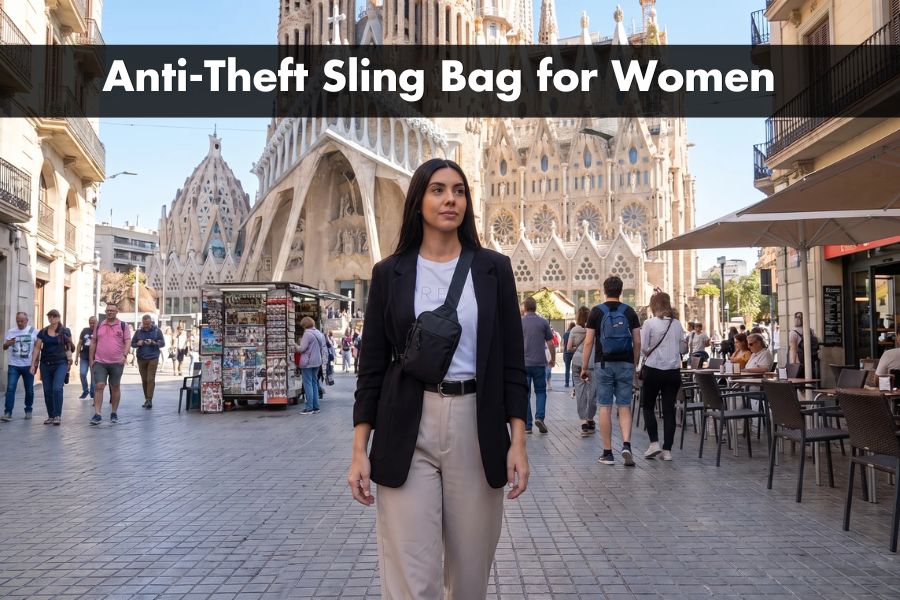
Worth knowing: Most thefts happen when the bag is at your back or side in a crowd — not when you're actively watching it. A bag worn in front of your body (sling style, crossbody) eliminates the majority of this risk before any other feature matters.
What Actually Makes a Bag Anti-Theft
The term "anti-theft" has no official standard — any brand can print it on any bag. So instead of trusting the label, look at the construction.
A genuine anti-theft bag for European travel is built around three design principles:
- Access control — zippers and openings face toward your body or are hidden behind panels, not exposed outward.
- Material resistance — fabric panels and straps can't be cut quickly with a knife or razor.
- Signal blocking — an RFID-shielded pocket protects payment cards and passports from electronic skimming.
Beyond these three, everything else — "anti-theft" zipper pulls, alarm clips, marketing badges — is secondary. A bag can skip those extras and still be genuinely secure. But a bag missing any of the three above is leaving you exposed to a real Europe travel threat.
The best anti-theft travel sling bags build all three into the core design, not as add-ons. That's the difference between a bag built for security and a bag marketed as secure.
The 5 Features That Matter Most
Not all features carry equal weight. Here's a ranked breakdown — from non-negotiable to nice-to-have.
1. Hidden or Body-Facing Zippers Must Have
Main compartment zipper should face your body when worn — not outward for easy access by someone behind you. Look for zippers that route to an inconvenient spot for anyone other than you.
2. RFID-Blocking Pocket Must Have
A shielded pocket keeps your passport, credit cards, and contactless payment cards safe from electronic readers. Should be clearly labeled and large enough for a passport.
3. Slash-Resistant Panels Must Have
Fabric panels reinforced with cut-resistant material (steel mesh or Dyneema fiber). Most important on the main body and shoulder strap — the two areas a bag snatcher targets first.
4. Lockable Zipper Loops Nice to Have
D-ring loops that accept a TSA lock let you secure the main compartment. Useful in crowded trains and at busy hostels. Not all bags include them, but it's a meaningful upgrade.
5. Low-Profile, Non-Tourist Aesthetic Must Have
A bag covered in patches, bright colors, or "travel" branding signals tourist. The best anti-theft bags look like local everyday carry — clean, minimal, dark colorways.
6. Water-Resistant Material Nice to Have
Europe's weather is unpredictable. A water-resistant coated exterior protects your passport, phone, and documents from sudden rain — a practical bonus for any city itinerary.
If you're shopping and a bag hits features 1, 2, 3, and 5 — it's a legitimately secure choice for Europe. Feature 4 and 6 are valuable but shouldn't be dealbreakers if the core four are solid.
Sling Bag vs. Backpack for Europe
This is one of the most common questions from travelers planning a Europe trip — and the honest answer depends on how long your day will be and what you're doing.
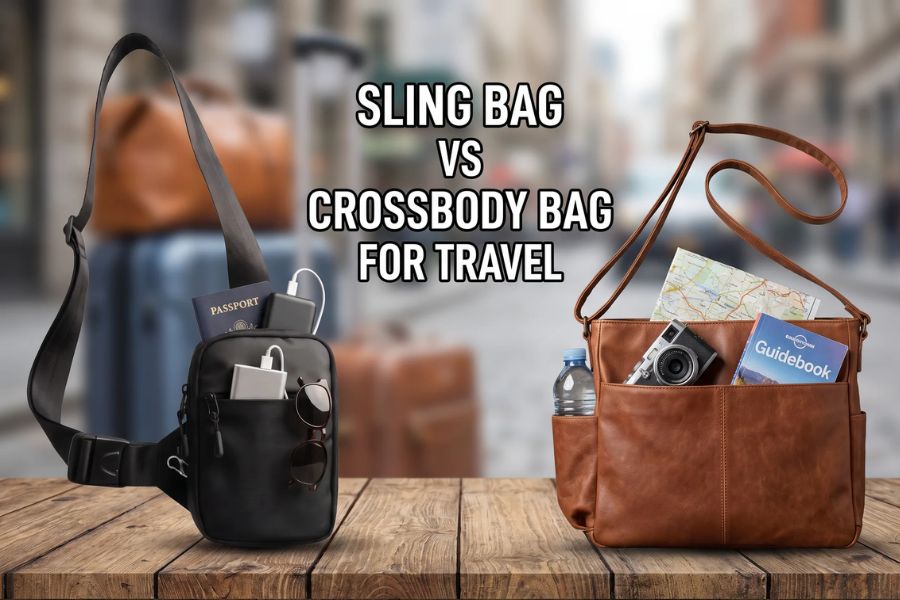
Sling / Crossbody Bag — Best for City Days
- Worn in front of your body = constant visual access
- Smaller profile → less to carry, less fatigue
- Easier to access essentials (metro card, phone, map)
- Faster through security, less attention at checkpoints
- Ideal for day trips, museum visits, evening outings
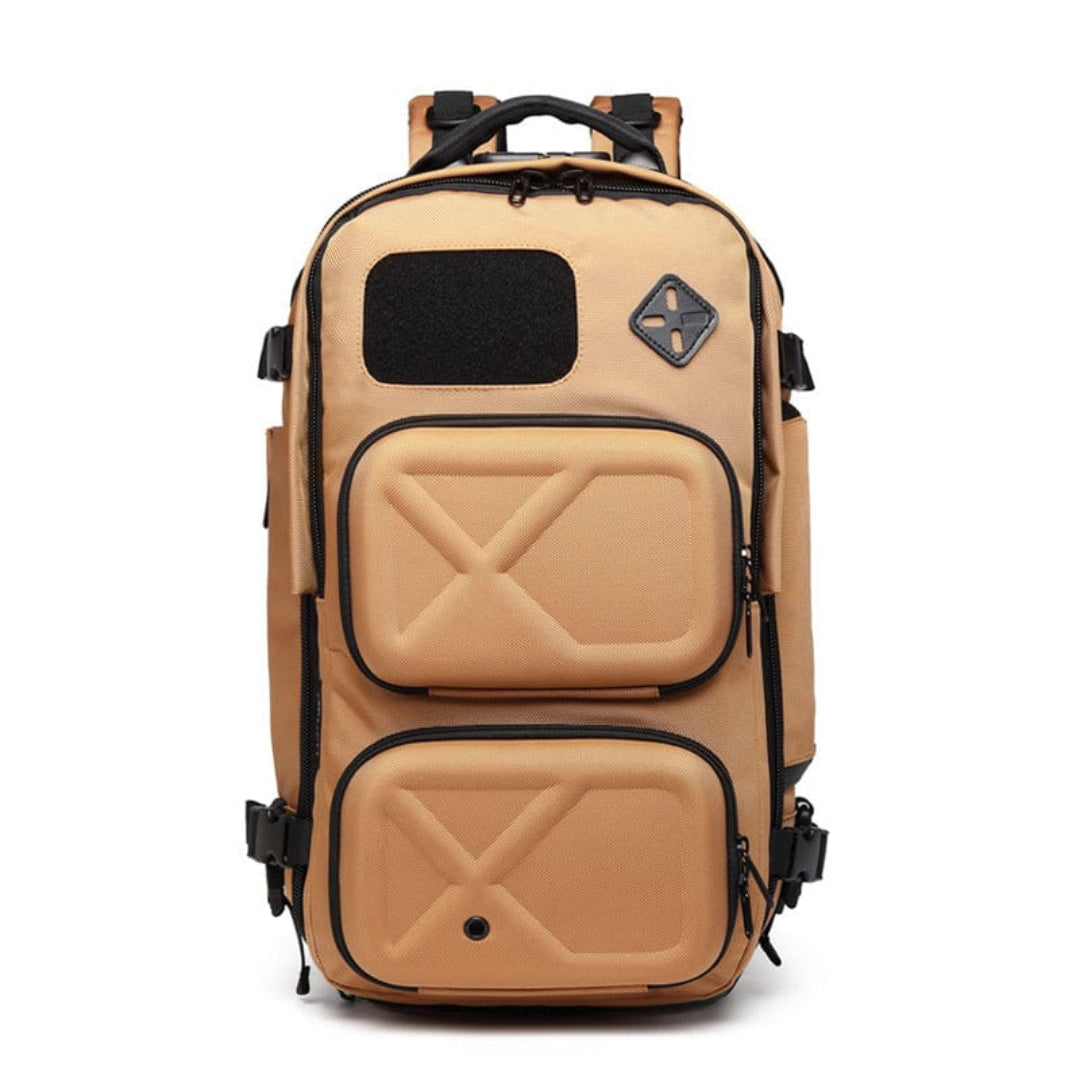
Backpack — Best for Multi-Day or Airport Days
- More capacity for overnight stays or long travel days
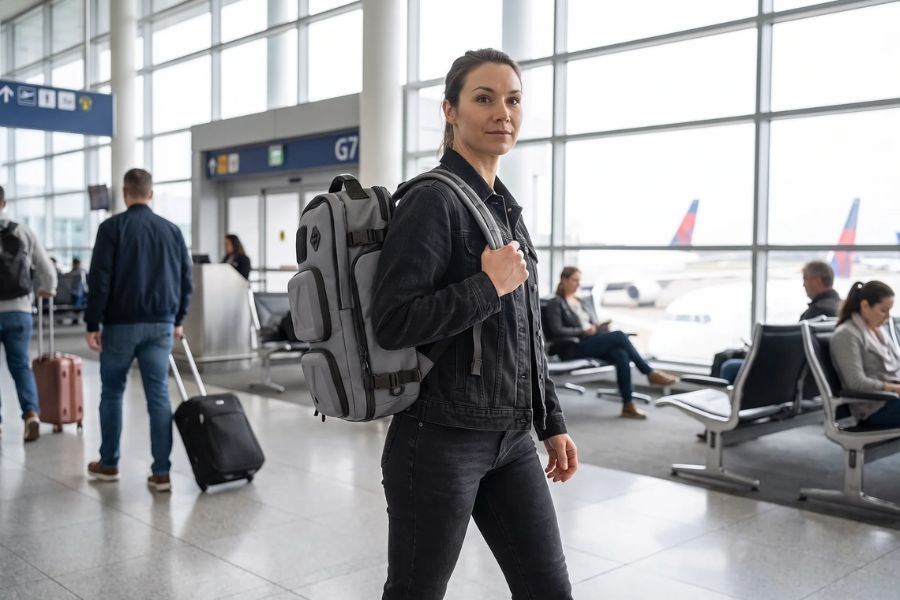
- Sits at your back in crowds — harder to monitor
- Better for carrying a laptop or heavier items
- Ideally worn on front in very crowded areas (metro, markets)
- Pair with a small crossbody for city exploring days
For most travelers visiting high-theft European cities, the smartest setup is a combination: a travel sling bag for daily exploring and a secure travel backpack for transit days and overnight stays. The sling handles 80% of your city time; the backpack handles the airport and train stations.
If you're committed to one bag, choose based on your primary activity. Lots of walking and sightseeing → sling. Multi-city rail trip with carry-on packing → backpack. You can read more about choosing between these in our guide to the best carry-on backpack for women's travel.
How to Pack Your Anti-Theft Bag for Europe
Even the best anti-theft bag can be compromised by poor packing habits. Here's how to use the security features you're paying for.
The Layered Carry System
In the RFID-blocking pocket: Passport, credit cards, debit card, health insurance card. Nothing else. Keep this zone clean so you always know what's there.
In the main (hidden/body-facing) compartment: Camera, phone, hotel key card, small cash reserve. This is your "quiet" zone — items you don't access frequently in public.
In an outer or quick-access pocket: Metro card, small amount of cash for the day, earbuds, lip balm. Limit this to things you're okay having visible when you open it in a crowd.
What to Leave at the Hotel
- Your second credit card (never carry both in the same bag)
- Your passport when local ID suffices (check local rules — a photo copy often works)
- Excess cash — keep one day's budget on you, rest in hotel safe
- Expensive jewelry or anything you'd be devastated to lose
Behavior That Makes Your Bag Work
The bag is only half the system. In crowded areas like Barcelona's La Rambla or Rome's Colosseum queue, wear your sling in front of your body with one hand casually resting on it. On the metro, don't put your bag on the seat next to you — keep it in your lap or between your feet. At cafés, loop the strap around the chair leg. These habits take about 30 seconds to become automatic and dramatically reduce your risk.
If you're traveling on budget European airlines and thinking about bag size restrictions, our Ryanair personal item size guide covers exactly what fits under the seat — and a sling bag almost always qualifies as a free personal item on any carrier.
Frequently Asked Questions
Is an anti-theft bag actually worth it for Europe travel?
Yes — if it's a genuinely constructed anti-theft bag, not just a bag with the label. The three features that deliver real protection are hidden or body-facing zippers, slash-resistant panels, and RFID-blocking pockets. In high-theft cities like Barcelona, Rome, and Prague, these features eliminate the most common theft methods. A bag with all three is meaningfully more secure than a standard tote or shoulder bag. The investment pays for itself if it prevents even one incident — because losing a passport in Europe means lost travel days, consulate visits, and stress that no trip should involve.
What is the best style of anti-theft bag for traveling through multiple European cities?
A crossbody sling bag is the most versatile style for multi-city European travel. It keeps your essentials in front of your body at all times, fits under airline seats as a personal item, and is small enough to carry all day without fatigue. For longer stays or trips that include overnight trains or multi-day packs, pairing a sling with a secure travel backpack gives you the best of both. Use the sling for city days and the backpack for transit days.
Do I need an RFID-blocking bag in Europe?
RFID skimming — where a thief uses a reader to steal contactless card data from a few inches away — is a real but relatively uncommon threat compared to physical pickpocketing. That said, RFID-blocking pockets add essentially no weight or cost to a bag, so there's no reason not to use one. More importantly, the habit of keeping your passport and cards in a dedicated shielded pocket keeps them organized and reduces how often you expose them in public. Think of RFID blocking as a free bonus to good pocket discipline, not the primary security feature.
Can I use an anti-theft sling bag as my only bag for a Europe trip?
For a weekend trip (2–4 days) with light packing, yes. A sling bag in the 6–10L range can hold a phone, passport, cards, earbuds, a light layer, a snack, and a water bottle — enough for a full day of sightseeing. For trips longer than 4–5 days, most travelers find they need the capacity of a carry-on backpack for clothes and toiletries, and carry the sling as their day bag. The two-bag system — one for the hotel, one for the street — is the most common and comfortable setup for extended Europe travel.
What color anti-theft bag is best for Europe travel?
Dark, neutral colors — black, charcoal, navy, or olive — are the best choice for European cities for two reasons: they blend in with local style (Europeans tend to dress in muted tones), and they don't signal "tourist" the way bright colors or obviously travel-branded bags do. Blending in is itself a theft deterrent. It's harder to spot you in a crowd as a target when you look like you belong there. As a practical bonus, dark colors don't show dirt from cobblestones, train seats, or outdoor markets.
Final Thoughts
Choosing the right anti-theft bag for women traveling to Europe comes down to three non-negotiable features: zippers that face your body, panels that resist cutting, and a pocket that blocks RFID signals. Everything else — lock loops, water resistance, minimalist aesthetics — adds meaningful value on top of that foundation.
Beyond the bag, the behaviors matter just as much: wearing it in front of your body in crowds, splitting your cards and cash across locations, and keeping your passport in a shielded pocket rather than a side pouch you open constantly.
The goal isn't to be paranoid — Europe is an incredible destination and most travelers complete full trips without incident. The goal is to remove the easy opportunities so that even in the moments when you're distracted, jet-lagged, or just excited to be somewhere beautiful, your bag is doing its job quietly in the background.
If you're still deciding between a sling and a backpack for your trip, our guide to the best carry-on backpack for women's travel breaks down the full comparison. And if you're flying a budget carrier like Ryanair, make sure you check the personal item size rules before you pack — a sling bag is one of the few bags that qualifies free on virtually every airline.
Travel Europe With Confidence
Arca's anti-theft sling bags are built with RFID-blocking pockets, slash-resistant construction, and hidden zippers — in a clean, minimal style that looks at home on any European street. Backed by a 1-year warranty.
Shop Anti-Theft Sling Bags →Arca Team
The Arca Official Team is a group of avid travelers and gear enthusiasts based between Vancouver, Canada and Buenos Aires, Argentina. Founded by two entrepreneurs who couldn't find affordable, quality travel gear, Arca Official has helped thousands of travelers pack smarter. Every article is researched and written by team members who test the gear themselves.