

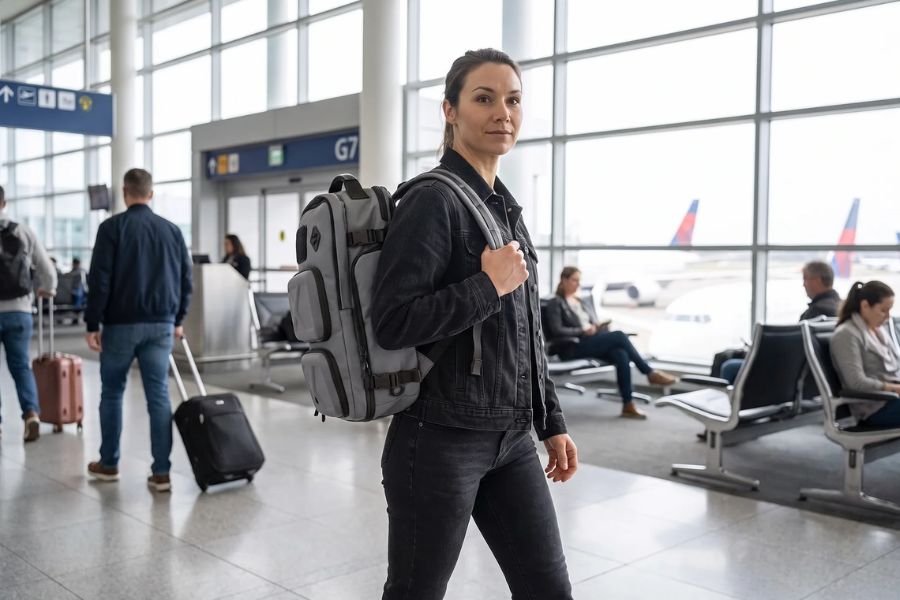
Best Carry On Backpack for Women Travel 2026: What to Look For & What Actually Works
The shift to carry-on-only travel isn't a trend — it's a permanent upgrade. No checked bag fees (often $35–$70 each way), no waiting at baggage claim, no lost luggage, and the freedom to book any airline without worrying about fare class rules. The one thing standing between most travelers and carry-on-only life is finding a backpack that actually fits the overhead bin, holds a week's worth of clothes, and doesn't destroy your back by day three.
This guide cuts through the marketing noise to explain what features genuinely matter in a carry-on backpack for travel in 2026, how to find the right size for any airline, and what a well-packed carry-on looks like in real life — not just a promotional photoshoot. If you're ready to browse, our carry-on backpack collection is built around the dimensions and features covered below.
What to Actually Look For in a Travel Carry-On Backpack
Most "what to look for" guides list every possible feature. Here's what actually separates a bag you'll love after 50 trips from one you'll resent after five:
Airline-Compliant Dimensions
Most US airlines allow a carry-on up to 22" × 14" × 9". Look for a backpack at or under these dimensions — ideally with some room to spare since overstuffing pushes soft bags beyond the stated size.
Weight Under 3 lbs Empty
Every pound the bag weighs is a pound less you can pack. Lightweight frames and ripstop materials keep the bag under 3 lbs empty, which makes a real difference over a long travel day.
Lockable Zippers
Zippers that can be locked together (even with a small TSA lock) deter opportunistic theft at airports, hostels, and on transit. Non-negotiable for solo travel.
Dedicated Laptop Sleeve
A padded laptop sleeve that's accessible without fully opening the bag speeds up security lines significantly. Look for one that fits a 15" laptop with room for a tablet.
External USB Port
Lets you charge your phone from a power bank inside the bag while walking through airports. Small feature, genuinely useful on long travel days.
Padded, Adjustable Straps
Straps designed for narrower shoulder widths and a shorter torso length make a carry-on backpack significantly more comfortable for smaller frames. Check if the sternum strap is adjustable vertically.
What doesn't matter as much as brands suggest
- Exact liter capacity: A 40L bag packed efficiently carries more than a 50L bag packed carelessly. Organization beats raw volume every time.
- Hundreds of pockets: Three or four well-placed compartments beat a dozen shallow pockets you forget to use.
- Waterproof rating: Water-resistant material handles rain and splashes. True waterproofing is rarely needed unless you're trekking in a rainforest — and adds weight.
Frame fit matters: A backpack designed with adjustable torso length and a sternum strap that adjusts vertically distributes weight far better on shorter or narrower frames. Try the bag on — or buy from somewhere with easy returns — to verify the fit before committing.
Size Guide: What Fits on Every Major Airline
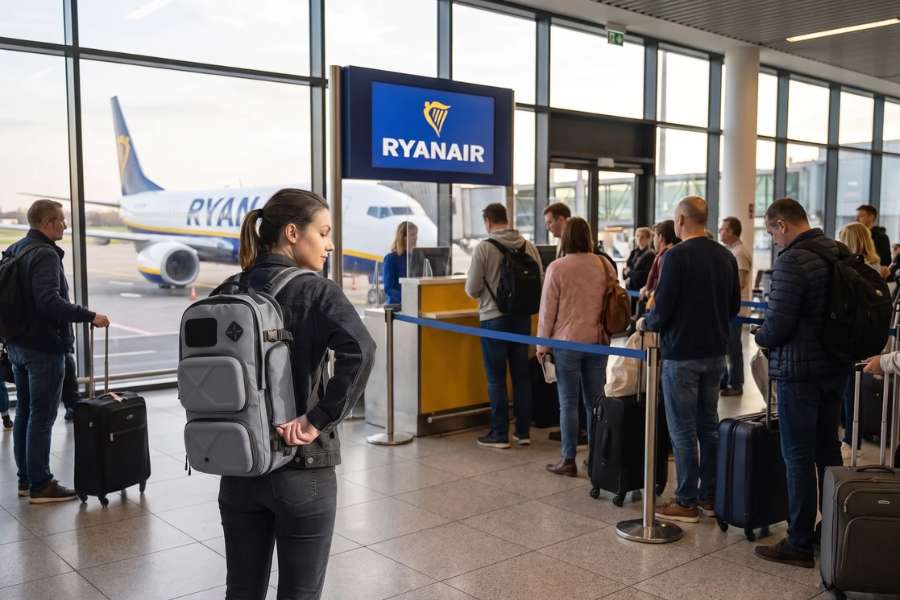
The standard US airline carry-on limit is 22" × 14" × 9", and most major US carriers stick close to this. International budget carriers like Ryanair have smaller limits, so if your travel includes a mix of US and European flights, sizing matters more.
| Airline | Carry-On Size Limit | A 22×14×9" Bag Fits? |
|---|---|---|
| Delta | 22" × 14" × 9" | Yes |
| American Airlines | 22" × 14" × 9" | Yes |
| United | 22" × 14" × 9" | Yes |
| Southwest | 24" × 16" × 10" | Yes |
| Alaska Airlines | 22" × 14" × 9" | Yes |
| JetBlue | 22" × 14" × 9" | Yes |
| Spirit / Frontier | 22" × 18" × 10" | Yes |
| Ryanair (w/ Priority) | 21.7" × 15.7" × 7.9" (55×40×20cm) | Check depth |
For domestic US travel, a backpack at or under 22"×14"×9" clears every airline with no issues. For trips that include Ryanair, the depth dimension (9" vs Ryanair's 7.9") is the potential conflict — look for a bag that can compress slightly or choose a bag in the 40–45L range that stays under 8" deep when not overpacked.
We cover Ryanair's exact bag rules in detail here if you're planning a European trip.
The safe universal size: A carry-on backpack at 20"–22" tall × 13"–14" wide × 8"–9" deep works on every major US airline and most international carriers. Bags in the 35–45L range typically fall into these dimensions when designed for travel rather than hiking.
Best Carry-On Backpacks for Travel in 2026
Rather than an exhaustive list of bags across every brand and price point, here's how to match a bag type to your actual travel style:
Compact Carry-On (25–35L)
For 2–4 day trips, a 25–35L carry-on backpack holds everything you need without the bulk of a full travel pack. Look for a clamshell opening (opens flat like a suitcase) for easy packing, a dedicated laptop sleeve, and lightweight ripstop material. The smaller footprint also makes navigating crowded cities and public transit significantly easier than a full-size pack.
Full Carry-On Travel Pack (40–45L)
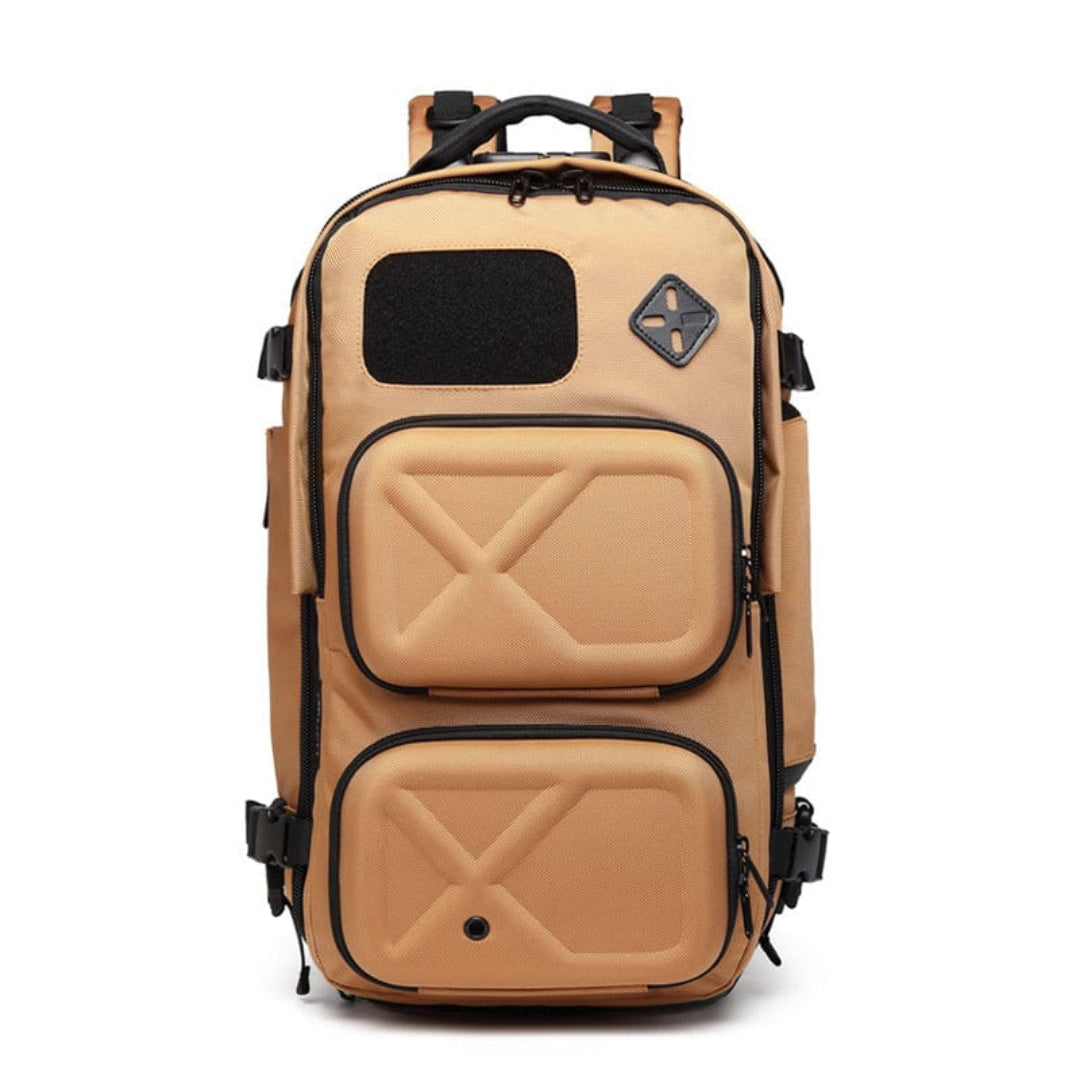
The one-bag travel sweet spot for longer trips. A 40–45L carry-on backpack holds a week of clothes, toiletries, electronics, and a packable jacket while staying within airline carry-on limits. Critical features at this size: compression straps to cinch the bag smaller when partially packed, a hip belt for comfort on long walking days, and organization that lets you access clothes without unpacking everything.
Anti-Theft Travel Backpack
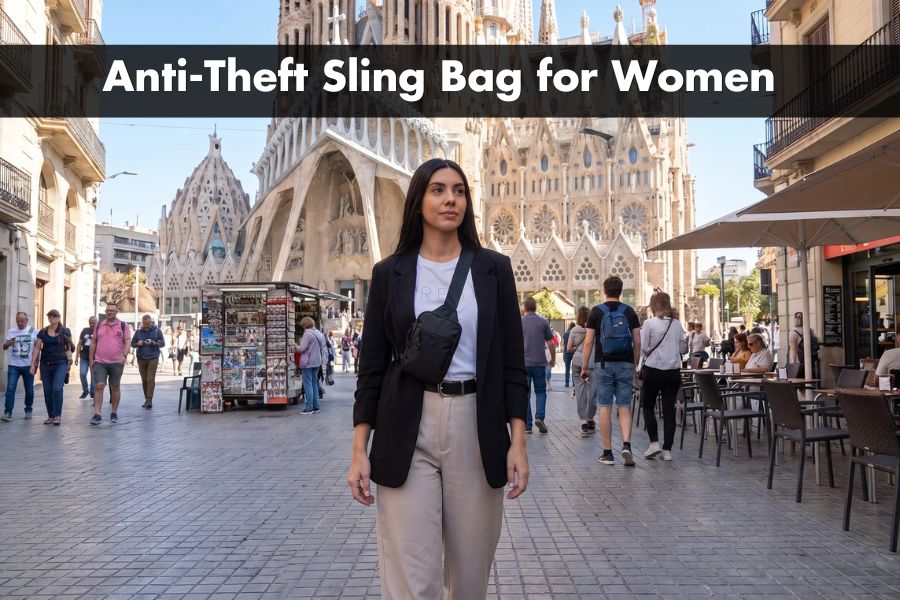
For travel in busy cities, crowded transit, and destinations where pickpocketing is a known risk, an anti-theft backpack earns its premium. Key features: hidden zippers that face the body rather than outward, RFID-blocking card pockets, a slash-resistant panel, and lockable main compartment zippers. Arca's travel backpacks include RFID-blocking technology and anti-theft zipper design throughout — built specifically for urban travel environments.
Ultralight Travel Pack (Under 2 lbs)
If you're doing high-volume travel — frequent fliers, digital nomads, people moving between destinations every few days — bag weight compounds fast. An ultralight carry-on pack under 2 lbs empty gives you the same carry-on capacity in a fraction of the weight. The trade-off is usually structure and organization features. Best suited for minimalist packers who have a clear packing system and don't need a lot of internal compartments.
Not sure whether a full carry-on or a personal item bag is right for your trip? If you're flying budget carriers frequently (Spirit, Frontier, Allegiant), a personal item bag that clears their sizers free is often the smarter financial move — see our comparison guides for each airline.
How to Pack Your Carry-On Backpack for a Real Trip
The most common reason carry-on-only travel fails isn't the bag — it's the packing. A 40L backpack packed without a system quickly becomes a heavy, unorganized mess. Here's the approach that actually works for trips of 5–10 days:
The 5-Category Packing System
Clothes
- 3–4 tops (merino or synthetic)
- 2 bottoms (1 can be worn on the plane)
- 1 dress or versatile layer
- 3–4 underwear (quick-dry)
- 2 pairs of socks
- 1 packable jacket
Tech
- Laptop + charger (laptop sleeve)
- Phone charger + cable
- Power bank (top pocket)
- Earbuds or headphones
- Universal adapter (international)
Toiletries
- All in 100ml / 3.4oz bottles
- Clear quart-size bag for security
- Solid shampoo / conditioner bars
- Refillable perfume atomizer
Documents & Essentials
- Passport (RFID-blocking sleeve)
- Digital + printed boarding passes
- Travel insurance card
- Local currency + backup card
Packing order for a backpack
- Bottom: Shoes (in a shoe bag), heaviest items
- Middle: Packing cubes with clothes — rolled or flat-packed
- Top: Jacket, things you'll need first when you arrive
- Front pocket: Toiletries quart bag, snacks, anything accessed at security
- Laptop sleeve: Laptop, tablet, reading material
- Hip belt or top handle pocket: Phone, earbuds, lip balm for the flight
The compression cube trick: Pack clothes in compression packing cubes and compress them before closing the bag. This can reduce the packed volume by 20–30%, which is often the difference between a bag that fits in the overhead bin and one that needs to be checked at the gate.
Frequently Asked Questions
What size carry-on backpack fits on all airlines?
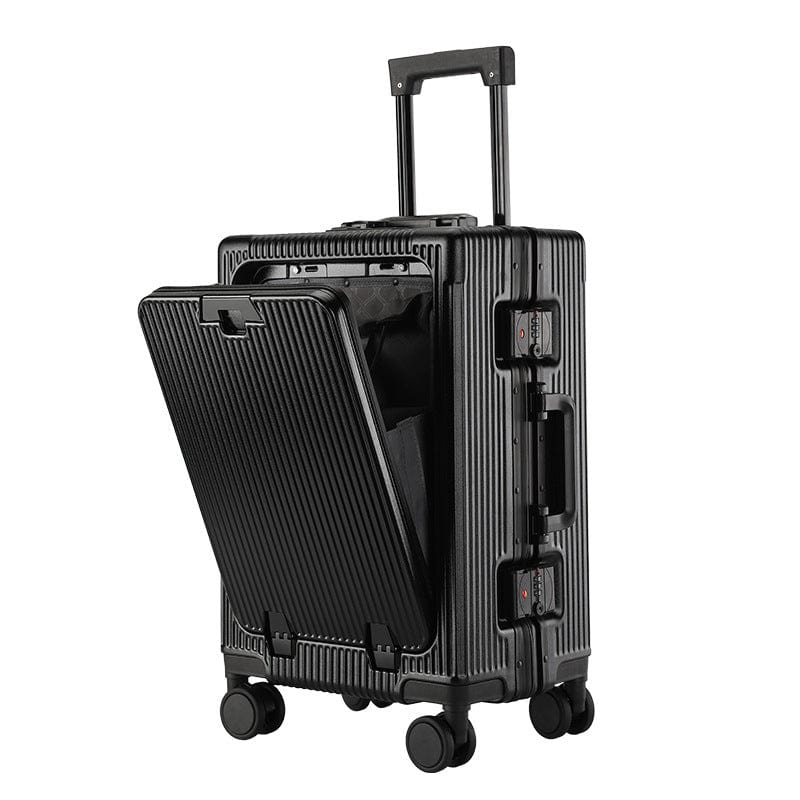
Is a backpack better than a rolling suitcase for travel?
How do I choose a carry-on backpack for a smaller frame?
Can I use a carry-on backpack as my only bag for a week-long trip?
Final Thoughts
The best carry-on backpack for travel in 2026 is the one that fits the overhead bin, holds what you actually need, and doesn't fight you during a long travel day. That means airline-compliant dimensions, a weight you can carry comfortably, and an organization system that makes packing and unpacking fast rather than frustrating.
The upgrade from checked luggage to carry-on-only pays off on the very first trip — in fees saved, time saved at baggage claim, and the freedom to book a last-minute fare change without worrying about whether your bag can come along. Start with the right bag, build a packing system around it, and carry-on-only travel becomes the default, not the exception.
Browse Arca's carry-on backpack collection and travel backpacks — built for the way frequent travelers actually move.
Carry On. Check Nothing. Go Anywhere.
Carry-on backpacks built for real trips — airline-compliant dimensions, anti-theft features, and organization that actually works.
Shop Carry-On Backpacks →Arca Team
The Arca Official Team is a group of avid travelers and gear enthusiasts based between Vancouver, Canada and Buenos Aires, Argentina. Founded by two entrepreneurs who couldn't find affordable, quality travel gear, Arca Official has helped thousands of travelers pack smarter. Every article is researched and written by team members who test the gear themselves.