


Vacuum Compression Backpack: How It Works, What to Expect, and Is It Worth It?
Most travel backpacks give you a fixed amount of space. Pack too much and you're forced to check a bag, pay the fee, and wait at baggage claim. A vacuum compression backpack changes that equation — it physically removes air from your packed clothes, collapsing the bag down so you can carry more without sizing up.
But is the technology as useful as it sounds? And does it actually work for real trips? Here's an honest breakdown of everything you need to know before you buy.
What Is a Vacuum Compression Backpack?
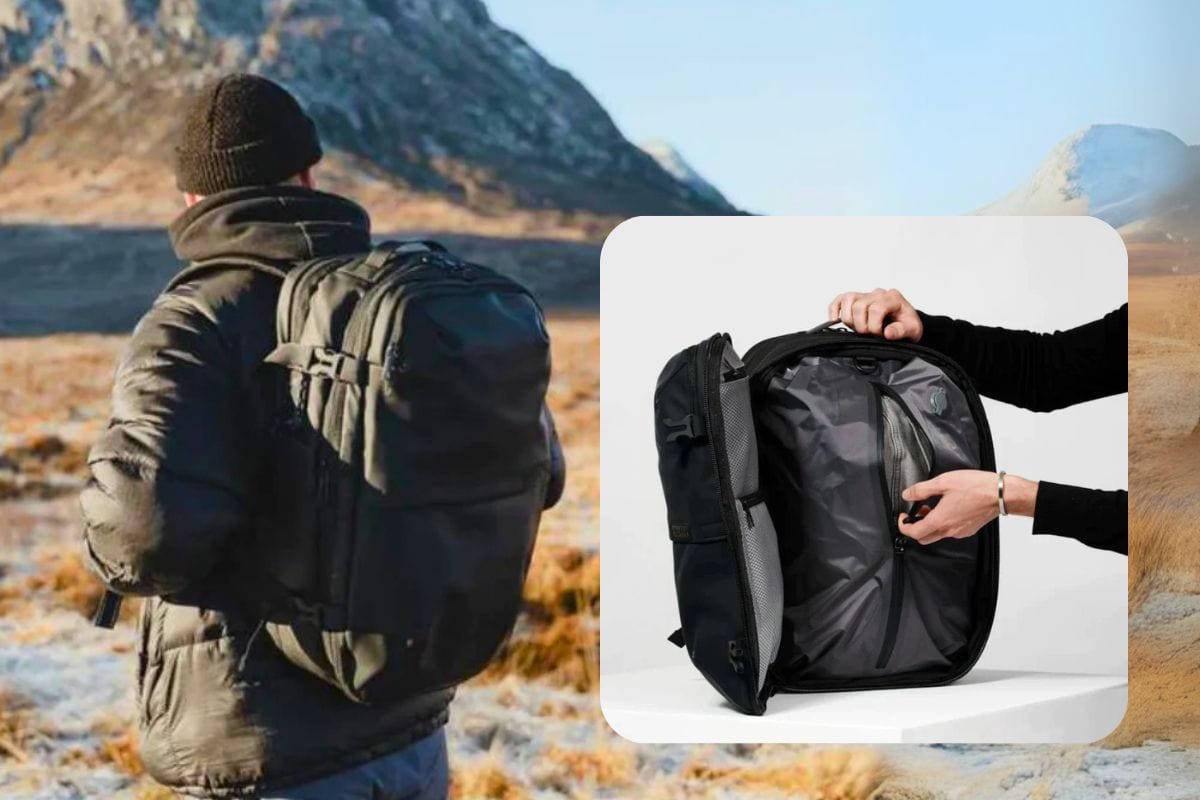
A vacuum compression backpack is a travel bag with a built-in vacuum chamber — typically a sealed inner compartment that connects to a one-way valve. You pack your clothes, seal the compartment, and use a hand pump or the bag's own compression mechanism to evacuate the air. The fabric collapses against your clothes, shrinking the total packed volume by up to 40–50%.
This is different from a standard compression backpack, which uses external straps to cinch the bag tighter from the outside. Strap compression reduces the bag's shape slightly but doesn't actually remove air from inside your clothes. Vacuum compression does — which is why it can collapse a down jacket to a fraction of its normal size.
How the Mechanism Works
- Pack your clothes into the vacuum chamber compartment
- Seal the zipper — it's airtight by design
- Activate the one-way valve (hand pump or roll-and-press)
- Air is forced out; the compartment collapses flat against your gear
- The one-way valve prevents air from re-entering
On the Arca Vacuum Compression Backpack, this system expands from a compact 22L carry profile to a full 48L packing capacity — meaning you get a bag that boards the plane at personal-item size but unpacks like a checked bag at your destination.
Vacuum Compression vs. Standard Compression: What's the Difference?
| Feature | Vacuum Compression | Standard Compression Straps |
|---|---|---|
| How it works | Removes air from packed clothes | Cinches the outside of the bag |
| Space savings | Up to 40–50% reduction | 10–20% reduction (shape only) |
| Best for | Bulky items: down jackets, hoodies, jeans | Keeping a partially full bag tidy |
| Wrinkle impact | Moderate (roll clothes to minimize) | Low |
| Works at the airport | Yes — collapse before boarding | Yes — always active |
| Re-expansion on arrival | Opens fully for unpacking | Always same size |
The practical advantage of vacuum compression is that it's reversible. You fly with the bag compressed, then fully expand it at your hotel so you can live out of it for the week. That's something standard compression can't offer.
Who Actually Benefits from a Vacuum Compression Backpack?
Not everyone needs one. Here's when it genuinely makes a difference:
It's ideal if you:
- Pack bulky layers — winter trips, mountain destinations, cold-weather cities
- Want to avoid checked baggage fees on budget airlines (Frontier, Spirit, Ryanair)
- Travel for 5–10 days but want to bring carry-on only
- Need to overpack for business trips (multiple outfit changes, shoes)
- Fly frequently and are tired of juggling bag size limits at the gate
It's less critical if you:
- Travel light by default — 3-day trips with minimal gear
- Only pack warm-weather destinations where clothes pack flat naturally
- Already travel carry-on only without needing extra space
The sweet spot is the traveler who's perpetually one jacket or one pair of shoes over the limit. A vacuum compression backpack solves that without making you choose what to leave at home.
Key Features to Look For
Not all vacuum compression bags are built the same. These are the features that actually matter:
1. Expandable Range
Look for a bag that collapses meaningfully — at minimum 30% reduction. The Arca Vacuum Compression Backpack goes from 22L to 48L, which covers the spectrum from personal item to overhead bin without carrying two separate bags.
2. Airline Size Compliance in Compressed State
This is the point of the whole product. Confirm the compressed dimensions fit your airline's personal item or carry-on rules. Many airlines enforce 18 x 14 x 8 inches for under-seat items — verify before you book.
3. TSA Lock
An integrated TSA-approved lock matters for checked baggage and airport security. It's also useful at hostels or when leaving your bag unattended. Look for bags where the lock is built into the zipper system, not an add-on you can lose.
4. Anti-Theft Construction
Hidden pockets, lockable zippers, and slash-resistant fabric aren't just marketing — they're practical for urban travel and crowded transit. The Arca bag includes hidden front pockets and RFID-blocking lining to protect your cards and passport.
5. Dedicated Laptop Sleeve
A padded, dedicated laptop compartment that sits outside the vacuum chamber means your tech is always accessible without repacking. Look for at least 15" compatibility.
6. Water Resistance
The vacuum chamber's airtight seal protects packed clothes, but the exterior should also be water-resistant so the bag itself handles rain, spills, and overhead bin condensation without issue.
How to Pack a Vacuum Compression Backpack (Step-by-Step)
Getting the most out of the system requires packing it correctly. Here's the method that maximizes compression without wrecking your clothes:
- Sort your clothes first. Put tech, toiletries, and shoes in the external compartments. Only clothes go in the vacuum chamber.
- Roll everything. Rolled clothes compress more evenly than folded stacks. It also reduces wrinkles compared to vacuum-packing flat folds.
- Pack densely. Fill the vacuum chamber to capacity before sealing — loose air pockets reduce the efficiency of the compression.
- Seal and compress. Close the airtight zipper completely, then activate the valve. You'll see the chamber shrink within seconds.
- Verify the fit. After compressing, check that the bag's overall dimensions are within your airline's limits before heading to the airport.
Pro tip: delicate items like dress shirts compress best when placed between rolled clothes rather than directly against the chamber wall.
Does It Wrinkle Clothes?
This is the most common concern — and it's valid. Vacuum compression does create more wrinkles than loose packing, but it's manageable:
- Rolling clothes instead of folding them significantly reduces crease lines
- Wrinkle-resistant fabrics (like the Arca Mercerized Cotton T-Shirt) come out of compression nearly press-ready
- Hanging clothes for 30 minutes after arrival releases most compression wrinkles
- For formal wear: pack your dress shirt on the outside, rolled loosely
The short version: for casual travel clothes, wrinkles aren't a serious issue. For formal wear, give yourself 20 minutes to let items breathe on arrival.
Vacuum Compression Backpack at the Airport: What to Expect
A few practical notes that don't always make it into product descriptions:
TSA screening: The vacuum chamber appears as a solid dense block on X-ray. Agents may ask you to open it — this is normal. It doesn't trigger additional screening more often than standard bags.
Altitude changes: Air pressure changes in-flight can cause the sealed compartment to expand slightly. This is expected and doesn't damage the bag or the mechanism. Re-compress at your destination if needed.
Gate check: If the gate agent asks you to check your carry-on, a compressed vacuum bag is protected just like standard luggage — your clothes are sealed and won't shift.
For more on navigating airline size rules, see our guides on Southwest Airlines personal item size and United Airlines personal item size.
The Arca Vacuum Compression Backpack: Feature Breakdown
If you're shopping specifically for a vacuum compression backpack, here's what the Arca Vacuum Compression Backpack delivers:
- 22L → 48L expandable capacity — compresses for carry-on, expands fully at your destination
- Built-in TSA-approved lock — integrated into the main zipper, not a separate accessory
- RFID-blocking lining — protects cards, passport, and contactless IDs
- Hidden anti-theft pockets — interior and back panel compartments for valuables
- Padded 17" laptop sleeve — protected and accessible without opening the main compartment
- Water-resistant exterior — Oxford Premium PU material
- Ergonomic padded shoulder straps — load-distributing design for longer carry
- 1-year warranty on manufacturing defects
It's designed for travelers who want one bag that handles both the airport and the week ahead — without paying premium prices for it.
Shop the Arca Vacuum Compression Backpack →
arcaofficial.com/products/vacuum-compression-backpack
Frequently Asked Questions
Can I use a vacuum compression backpack as a carry-on?
Yes, in compressed state. Most vacuum compression backpacks are designed to meet standard carry-on or personal item dimensions when fully compressed. Always verify your specific airline's size limits — they vary between carriers. The Arca bag compresses to a profile that fits most US domestic carriers' personal item requirements.
How much space does vacuum compression actually save?
Typically 30–50% depending on what you pack. The biggest gains come from bulky items: down jackets, hoodies, jeans, and sweaters. Thin summer clothes don't compress as dramatically since there's less air to remove. For a week-long trip with layers, the difference can be the equivalent of adding an entire extra outfit's worth of space.
Does vacuum compression damage clothes?
Not if you pack correctly. Rolling clothes rather than folding them before compressing prevents crease lines. Delicate fabrics like silk or linen are better stored in external compartments, not vacuum-sealed. For everyday travel fabrics — cotton, polyester blends, performance materials — compression has no lasting effect.
Is the pump built in or do I need to carry one?
This depends on the bag. Some designs use a roll-and-press mechanism (no pump needed), while others include a small hand pump. The Arca Vacuum Compression Backpack uses a built-in one-way valve system that doesn't require a separate pump — you seal and compress without any additional accessory.
Can I fly with the bag in its compressed state?
Yes. The compression holds during flight. Cabin pressure changes may cause minor expansion of the sealed compartment, but the bag won't open on its own and the mechanism isn't affected by altitude. Re-compress at your destination if needed.
What's the difference between a vacuum compression backpack and vacuum packing cubes?
Vacuum packing cubes are separate bags you pack clothes into, then compress before placing inside a regular backpack. A vacuum compression backpack integrates the chamber directly — there's nothing extra to carry, load, or keep track of. It's more streamlined and the space savings are applied to the overall bag profile, not just individual clothing bundles.
Final Verdict: Is a Vacuum Compression Backpack Worth It?
For the right traveler — yes, meaningfully. If you regularly overpack, travel to cold destinations, or want to avoid checked baggage fees without downsizing your wardrobe, vacuum compression solves a real problem that regular travel backpacks can't.
The key is buying one that's actually built for travel, not just marketed as such. That means integrated security features, a real expandable range, laptop access without unpacking, and dimensions that actually meet airline requirements when compressed.
Browse the full Arca travel backpack collection or go straight to the Vacuum Compression Backpack if you're ready to stop choosing between packing everything and paying for checked bags.
Arca Team
The Arca Official Team is a group of avid travelers and gear enthusiasts based between Vancouver, Canada and Buenos Aires, Argentina. Founded by two entrepreneurs who couldn't find affordable, quality travel gear, Arca Official has helped thousands of travelers pack smarter. Every article is researched and written by team members who test the gear themselves.