


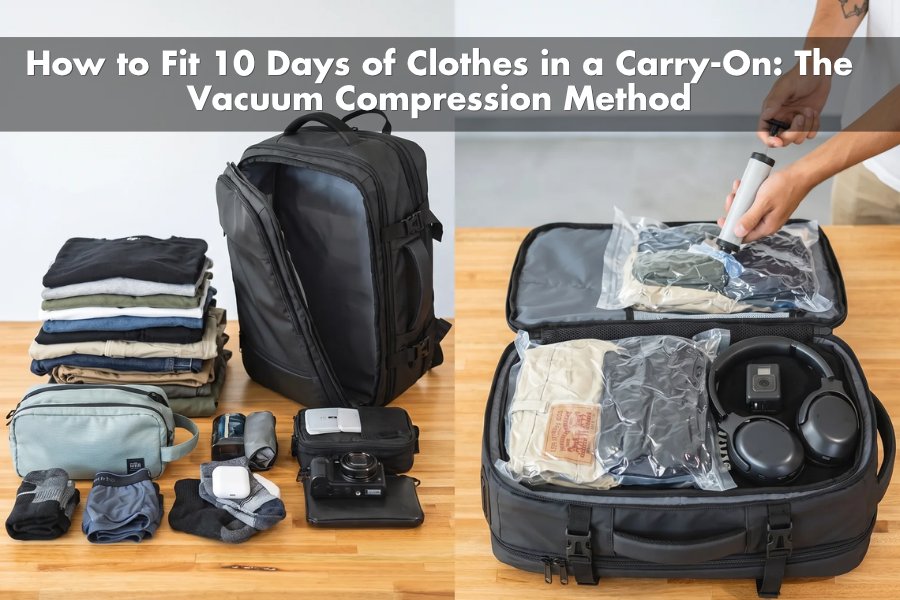
How to Fit 10 Days of Clothes in a Carry-On: The Vacuum Compression Method
At some point you've made the deal with yourself: carry-on only, no checked bags, no waiting at the carousel. Then you start laying out 10 days of clothes on the bed and the deal falls apart. There's just too much.
Here's the thing — it's not actually about the number of days. It's about how much space clothes take up when packed the traditional way. Fix the space problem, and 10 days in a carry-on is genuinely straightforward. That's what vacuum compression does, and if you've never used it, the difference feels almost absurd the first time you see it. The clothes that fill a checked bag get reduced to what fits cleanly inside a carry-on backpack — without cutting anything from your packing list.
Why 10 Days Feels Impossible to Carry On
Think about what a folded cotton t-shirt actually is: mostly air. The fabric is thin, but when you fold or roll it the standard way, it traps space between the layers. Stack five of those and you've used a quarter of your carry-on before you've packed a single bottom, shoe, or layer.
Add one hoodie or jacket — which most people bring for the plane — and you've burned through another third of the bag. That's when the math stops working and people reach for a checked suitcase instead.
The fix isn't to pack fewer clothes. It's to remove the air.
What Vacuum Compression Actually Does
Vacuum compression is exactly what it sounds like: you load clothes into a sealed chamber, extract the air, and the volume drops by 40 to 60 percent. The fabric compresses flat. The weight stays the same, but what took up the space of five rolled shirts now takes up the space of two.
For 10-day trips, this matters at a very practical level. The savings are big enough that a well-designed carry-on backpack with a built-in vacuum chamber can hold a full week and a half of clothes — plus shoes, accessories, and toiletries — without checking anything.

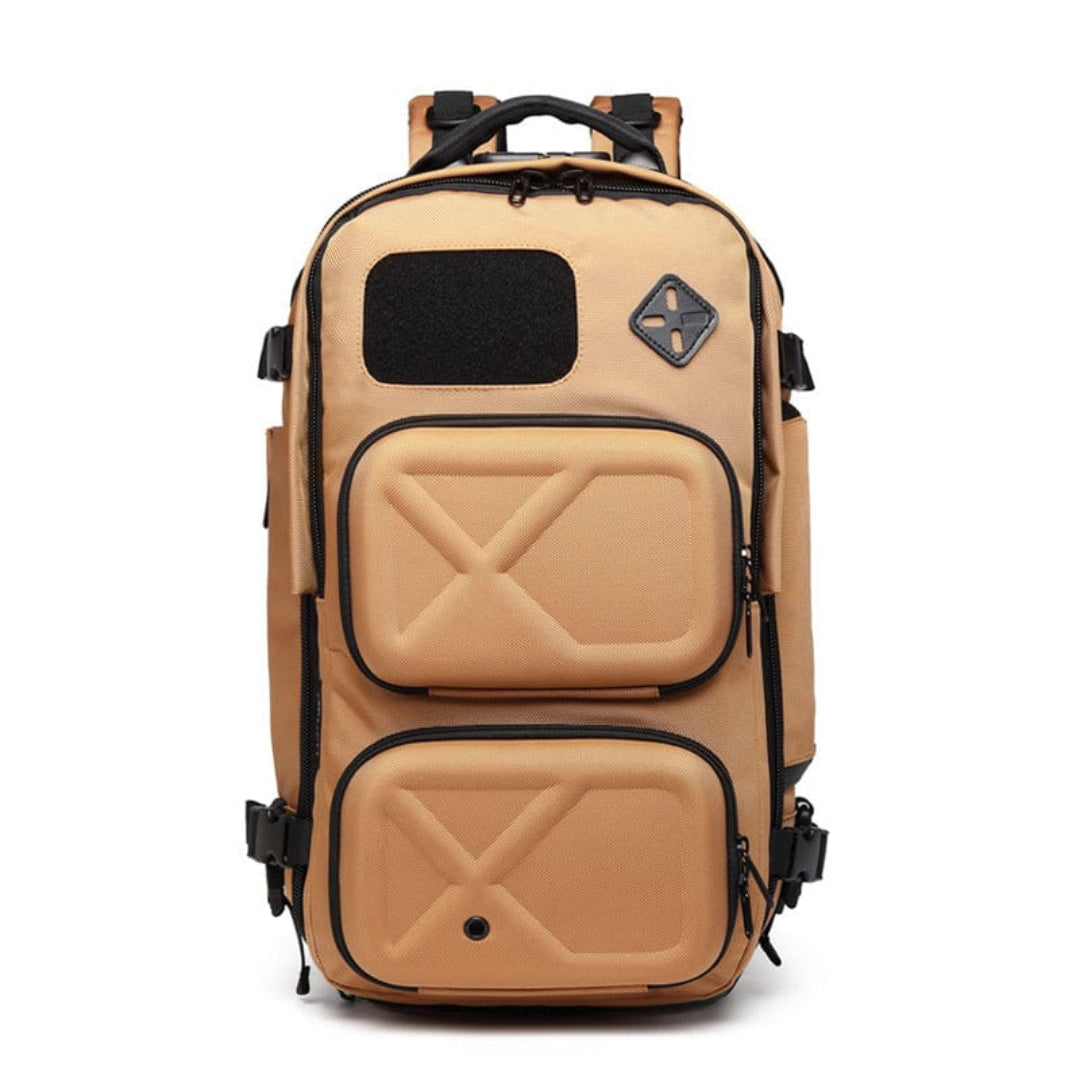
Built-in pump, carry-on compliant (19"), fits 10 days of clothes
Shop now →
The 10-Day Carry-On Formula
More compression doesn't fix packing too much — it just makes the excess slightly smaller. The packing list matters as much as the method. Here's what actually works for 10 days without over-packing:
| Category | How Many | Notes |
|---|---|---|
| T-shirts / tops | 5–6 | Re-wear 1–2; plan one sink wash or laundry stop mid-trip |
| Bottoms (pants, shorts) | 3 | Most can be reworn 3–4 times; jeans 5–6 |
| Underwear & socks | 7–8 each | Compresses less than tops; plan for a laundry stop around day 6 |
| Hoodie or jacket | 1 | Compresses dramatically in vacuum — more on this below |
| Shoes | 2 pairs max | Wear the bulkier pair on the plane; pack one lightweight pair |
| Toiletries | 1 bag | TSA 3-1-1 for liquids; solid shampoo, bars, and powder products don't count toward the liquid limit |
This list packs into the vacuum chamber with room left for shoes, a toiletry bag, and a small daypack or sling. The key variable is the clothes themselves — and that part matters more than most packing guides mention.
The Clothes That Pack the Smallest
Compression helps every fabric, but not equally. Heavy cotton with a loose weave stays bulky even after compression. Synthetic fabrics compress well but hold odor over a multi-day trip. The fabric that responds best to compression — and comes out looking the least wrecked — is mercerized cotton.
The quick version: mercerized cotton has been processed to make the fibers denser and smoother, which means it packs flat, resists wrinkles better than regular cotton, and comes out of a vacuum bag looking nearly pressed. Hang the shirt for 20 minutes and almost all the compression wrinkles release without ironing. We wrote a full breakdown of exactly how this works — what mercerization does to the fiber and why it matters for travel — in our guide to mercerized cotton for travel clothes.
For packing purposes: a mercerized cotton t-shirt can go from a vacuum bag to a dinner reservation the same evening. Regular cotton often can't.

Wrinkle-resistant, quick-dry, 7 colors. Designed for compression packing and extended travel.
Shop now →
The One Bulky Item That's Actually Worth Bringing
Most packing advice tells you to leave the hoodie at home. That's the wrong call. A hoodie is one of the most versatile pieces on any trip — it works as a blanket on a long flight, a layer for early mornings, and an outer piece for a cooler evening in the city. The reason people leave it behind isn't that it's useless — it's that it takes up too much space. That's a compression problem, not a packing problem.
An oversized zip-up hoodie compresses down to almost nothing in a vacuum bag. The extra fabric that makes it comfortable is the same fabric that traps air. Seal the chamber and it packs flat. Pull it out on the other side and it looks almost exactly the same as when it went in — no damage, no shape loss.
The zip closure also matters for travel versatility. A full-zip lets you regulate temperature without taking the hoodie off, which is useful any time you're moving between air-conditioned interiors and warmer outdoor temperatures — which happens constantly on most trips.

Premium cotton fleece. 11 colors. Compresses flat in a vacuum bag — no shape loss.
Shop now →
How to Use the Vacuum Compression Method — Step by Step
Once you have the right clothes and the right bag, the process itself takes about 15 minutes. This is the order that works:
- Roll everything before it goes in. Tight rolls, tighter than you'd normally bother with. Rolling expels more air than folding and helps compression work evenly across the whole chamber.
- Load the chamber with soft layers first. T-shirts and light layers go in first — they fill the gaps better. Bottoms and the hoodie go in on top.
- Seal the chamber and compress. The Arca Vacuum Compression Backpack has a built-in pump — no separate pump to carry. Compress until the chamber is flat and firm.
- Pack shoes around the compression chamber. Once the chamber is sealed, shoes fit in the gaps alongside it. Put them in a shoe bag if you want to keep the compartment clean.
- Use the front pockets for everything you need mid-flight. Passport, earbuds, tech organizer, snacks, whatever you'll access during the flight — pack those in the front pockets, not behind the vacuum seal.
When you arrive, hang your shirts for 15–20 minutes. With mercerized cotton, most compression wrinkles release on their own. You won't need to iron.
What Fills the Remaining Space
After the vacuum chamber is loaded and shoes are in, there's more room than you'd expect. Here's what fills it usefully — and what's worth adding to your kit if you don't already have it:


The sling bag earns its place: pack it flat inside the backpack for the flight, then pull it out at your destination for day trips. It's compact enough to meet the personal item limit on most carriers if you want to carry it separately. Check our airline carry-on guide to confirm size limits before you fly — rules vary more than most people expect.
Frequently Asked Questions
Is 10 days in a carry-on really possible without doing laundry?
It's possible, but tight. A more realistic plan is one laundry stop around day 5 or 6 — either a hotel laundry service or a local laundromat. That cuts your packing list to 5–6 days of clothes, which compresses easily and leaves spare room. If you're somewhere with no laundry access at all, bring 7–8 of each (tops, underwear, socks) and lean on the vacuum compression to manage the volume.
Does vacuum compression wrinkle clothes badly?
It depends on the fabric. Regular cotton wrinkles noticeably and may need ironing. Mercerized cotton and most performance travel fabrics release compression wrinkles faster — hang the item for 15–20 minutes and most creases fall out on their own. Linen is the worst: it wrinkles from compression and doesn't recover well. If you're building a compression-friendly wardrobe, mercerized cotton is the right base.
What's the difference between packing cubes and vacuum compression?
Packing cubes organize — they separate categories of clothes and make unpacking cleaner, but they don't reduce volume. Vacuum compression reduces volume by removing the air. They work well together: use packing cubes for socks, underwear, and small accessories, and the vacuum chamber for clothing. One solves the organization problem; the other solves the space problem.
Can you use a standalone vacuum compression bag inside a regular backpack?
You can, but it's messier in practice. You need a separate pump (or you're rolling the bag manually), the bags wear out with heavy use, and fitting a compressed bag back into an unstructured backpack is awkward. A backpack with an integrated vacuum chamber — like the Arca Vacuum Compression Backpack — is designed around the compressed shape. Everything fits cleanly because the bag is built to hold what it compresses.
What carry-on size rules apply for US flights?
Most US carriers allow overhead bags up to 22 x 14 x 9 inches (56 x 36 x 23 cm). The Arca Vacuum Compression Backpack is 19 inches — carry-on compliant on most domestic and international routes. Budget carriers and some international airlines have stricter limits, so always verify before you fly. Our carry-on size guide for major US airlines covers the specific limits for each carrier.
How do you wash clothes mid-trip if there's no laundromat nearby?
Sink washing works well for tops, socks, and underwear. A small amount of travel soap (or hotel shampoo), a thorough rinse, and rolling the wet item in a dry towel to pull out moisture before hanging — that's the whole process. Mercerized cotton dries faster than regular cotton and holds up to repeated sink washing better than most fabrics. For bottoms and the hoodie, spot-clean as needed and plan for at least one proper laundry stop if you're going 10+ days without access to hotel laundry.
The Short Version
Ten days in a carry-on works once you solve the space problem first. Vacuum compression cuts the volume of your clothes by 40 to 60 percent — enough to make the math work even for extended trips. Pair it with the right fabric choices (mercerized cotton for tops, an oversized zip-up for your layer) and you won't need to check anything.
The Arca Vacuum Compression Backpack is built around this method — carry-on compliant, integrated pump, compression chamber designed to hold a full 10-day wardrobe. Browse all carry-on backpacks from Arca to see the full range, or go straight to the compression backpack below.
Shop the Arca Vacuum Compression Backpack →
arcaofficial.com/products/vacuum-compression-backpack
Arca Team
The Arca Official Team is a group of avid travelers and gear enthusiasts based between Vancouver, Canada and Buenos Aires, Argentina. Founded by two entrepreneurs who couldn't find affordable, quality travel gear, Arca Official has helped thousands of travelers pack smarter. Every article is researched and written by team members who test the gear themselves.