

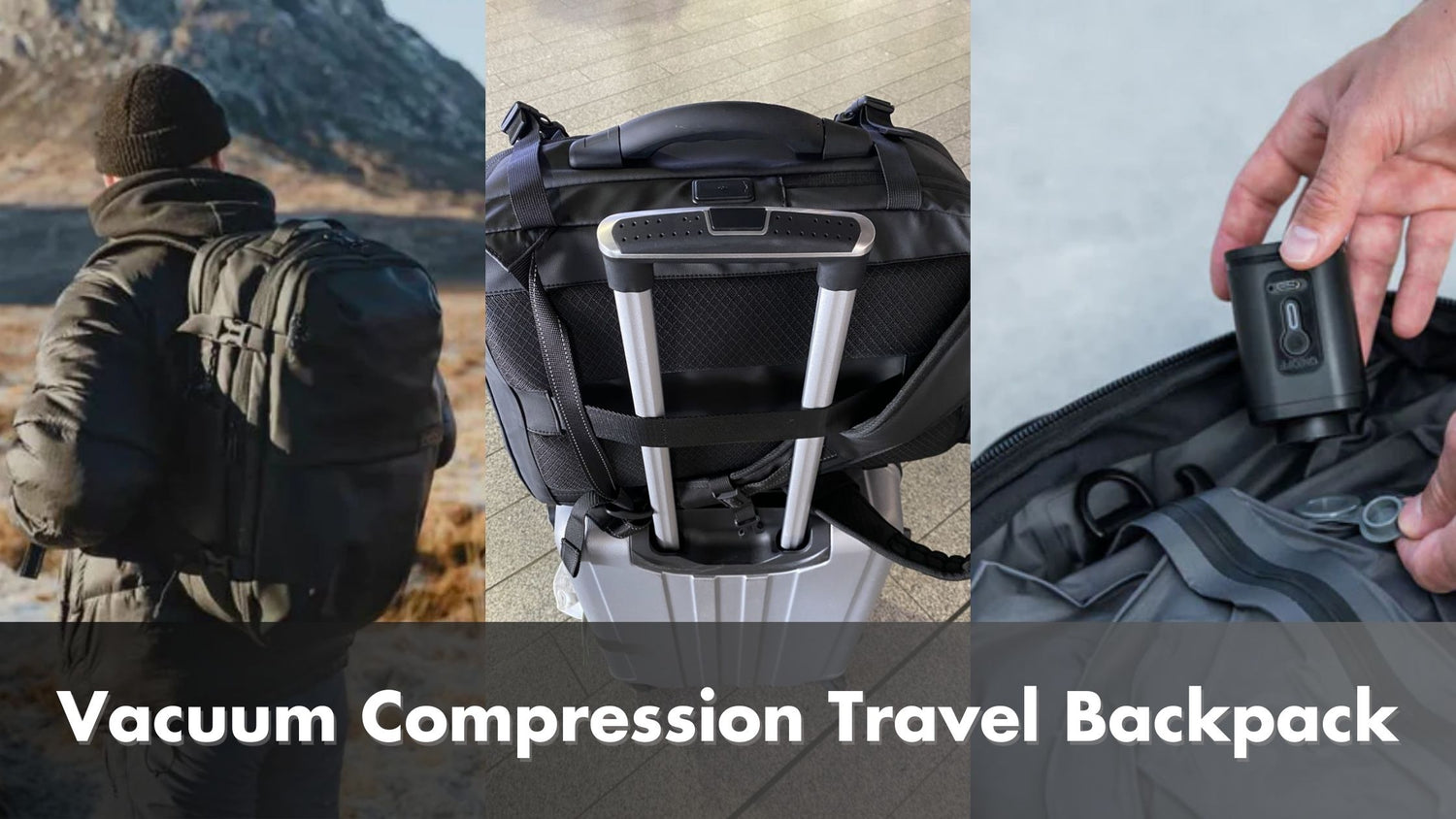
Compression Travel Backpack: What It Is, How to Use It, and What to Buy in 2026
You've packed everything you need for the trip — and your bag still looks like it's about to split. A compression travel backpack isn't just marketing language. Used correctly, it can turn a week's worth of clothes into a carry-on that fits under the seat in front of you, without leaving anything behind.
Here's a complete guide to how compression backpacks actually work, what the different types do, and how to choose the right one for your travel style.
What Is a Compression Travel Backpack?
A compression travel backpack is a bag designed to reduce its packed volume, either by cinching the outside profile or by removing air from the interior. The goal is the same in both cases: let you carry more without increasing the bag's physical footprint.
Travel gear built to go everywhere you do
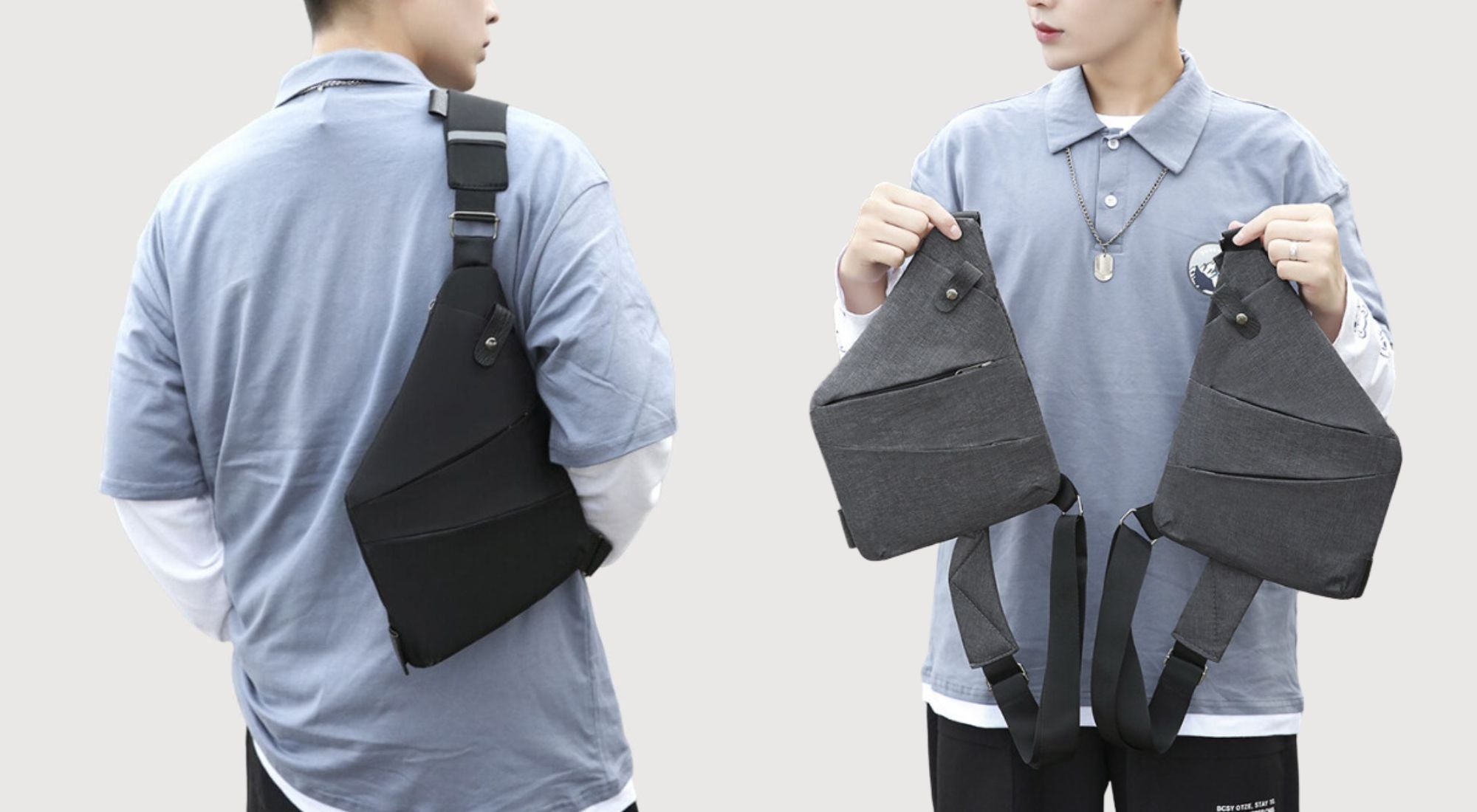
From carry-on backpacks to anti-theft sling bags, packing cubes to travel clothing — Arca has everything you need for smarter, lighter travel.
Shop Arca Best Sellers →There are two types — and they work very differently:
Type 1: External Compression Straps
Side straps tighten around the bag, pulling the exterior inward and keeping a partially-full bag from looking bulky or flopping around. This is the most common type — useful for day hikes and weekend trips, but limited in how much actual space it saves (typically 10–20%).
Type 2: Vacuum Compression
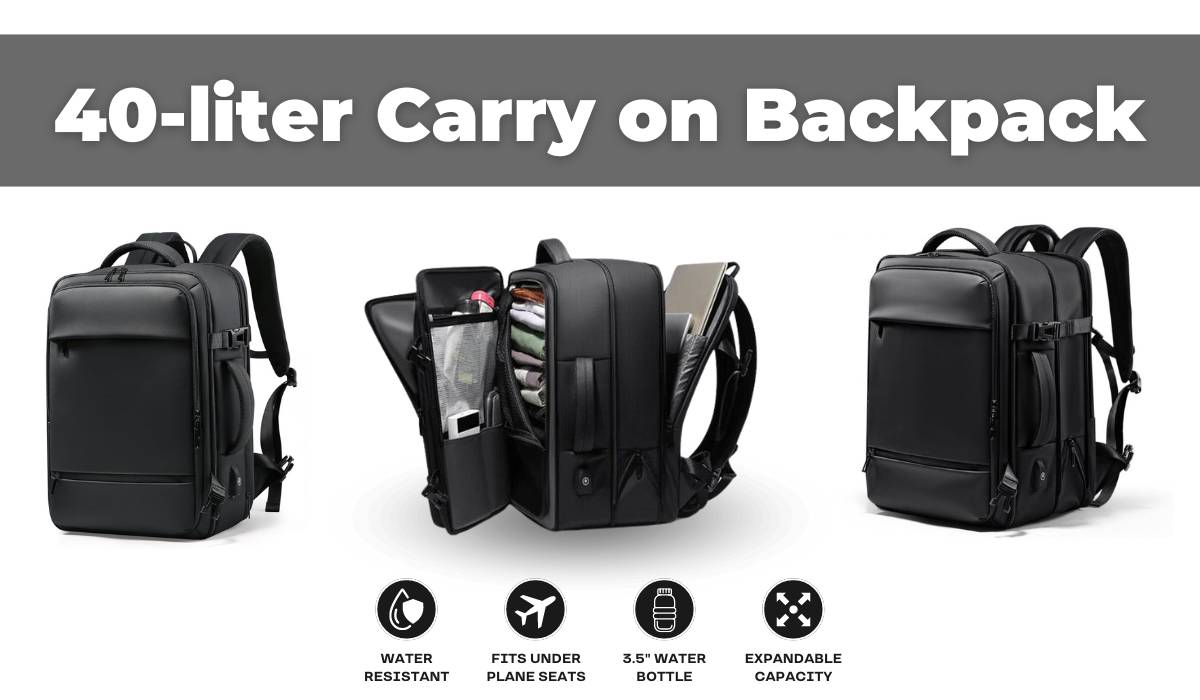
An interior airtight compartment evacuates air from your packed clothes through a one-way valve. The chamber collapses against your gear, reducing packed volume by up to 50%. This is the technology used in the Arca Vacuum Compression Backpack, which expands from 22L to 48L depending on what you need.
For travel purposes — particularly air travel — vacuum compression is significantly more useful. External straps make a full bag look tidy; vacuum compression actually creates more room.
Why Compression Matters for Air Travel
Airline carry-on rules have gotten stricter. Budget carriers like Frontier and Spirit now charge for any bag that doesn't fit under the seat. Even on legacy carriers, gate agents enforce overhead bin limits more aggressively than they did five years ago.
A compression travel backpack helps in two specific ways:
- Board-size compliance: Compress the bag before you reach the gate, and it meets the personal item dimensions. Expand it at your hotel for the full capacity.
- More stuff in less space: The compression doesn't change what you bring — it changes how much air your clothes are taking up. You still pack the same wardrobe; it just takes up less room.
For anyone who travels frequently and doesn't want to pay checked baggage fees, a compression travel backpack pays for itself after a few trips.
How Much Can Compression Actually Save?
It depends on what you pack. Here's a realistic breakdown:
| Item Type | Space Savings from Compression | Notes |
|---|---|---|
| Down jackets / puffer vests | 50–60% | Most dramatic — air is the main volume |
| Hoodies / sweatshirts | 35–45% | Roll before compressing for best results |
| Jeans / thick pants | 20–30% | Dense fabric compresses less than air-filled |
| T-shirts / lightweight tops | 15–25% | Roll tightly; thin fabrics compress well |
| Shorts / underwear | 10–20% | Already minimal — compression helps less |
| Shoes / hard items | 0% | Pack in external compartments, not the chamber |
The bottom line: if you're packing for a cold-weather trip or bringing layers, compression is worth a lot. Warm-weather packing with thin fabrics sees less dramatic savings, but still benefits from the structural organization.
What to Look For in a Compression Travel Backpack
These are the features that separate a bag worth buying from one that just uses compression as a marketing word:
Real Expandable Range
The bag should have a meaningful difference between its compressed and expanded states. A bag that claims "compression" but only collapses by 5% isn't useful. Look for bags where the compressed volume genuinely fits within airline personal item rules (typically 18 x 14 x 8 inches), and the expanded volume handles a week's worth of travel.
Airline Size Compliance
Check the compressed dimensions against your most common airline's rules. US carriers vary significantly — see our guides on Frontier Airlines personal item size and Southwest Airlines personal item size for exact measurements.
Security Features
A travel backpack you're carrying through airports, metro stations, and crowded cities needs anti-theft protection built in. Non-negotiables: lockable zippers, hidden compartments, and RFID-blocking lining to protect your payment cards and passport from contactless skimmers. The best compression travel backpacks include all three as standard.
Laptop Access Without Repacking
Your laptop sleeve should be in a separate, accessible compartment — outside the vacuum chamber. You need to get to your laptop at TSA without unpacking your entire bag. A 15"+ padded sleeve with its own exterior-facing zipper is the right design.
Water Resistance
The sealed vacuum chamber already protects clothes inside it, but the bag's exterior needs to handle rain and spills too. Look for Oxford Premium PU, nylon, or polyester with water-resistant coating. Delaminating fabric is the most common failure point on budget compression bags.
Ergonomic Carry System
A fully packed 40–48L bag is heavy. Padded shoulder straps with a sternum strap and load-distributing back panel make the difference between comfortable and painful when you're going through a long terminal or navigating a city with transit.
The Arca Vacuum Compression Travel Backpack
The Arca Vacuum Compression Backpack is built around the core problem: how do you bring everything you need for a real trip without checking a bag or arriving somewhere unable to carry your luggage?
Here's what it includes:
- 22L → 48L vacuum compression range — collapses for boarding, expands fully at your hotel
- Built-in TSA-approved lock — integrated into the main compartment zipper
- RFID-blocking lining — protects cards, passport, and contactless IDs
- Anti-theft hidden pockets — interior and rear panel compartments for valuables
- 17" padded laptop compartment — separate from the vacuum chamber for easy access
- Water-resistant Oxford Premium PU exterior
- Ergonomic padded shoulder straps with load-distributing back panel
- 1-year warranty on manufacturing defects
It handles both the airport and the destination — carry-on compliant when compressed, fully livable when expanded. Priced at $159, it undercuts comparable bags from premium-only brands by $100–$200.
Get the Arca Vacuum Compression Backpack →
arcaofficial.com/products/vacuum-compression-backpack
How to Pack a Compression Travel Backpack for Maximum Space
The technique matters as much as the bag. Follow this system for the best results:
Step 1: Sort into two categories
Clothes go in the vacuum chamber. Everything else (shoes, tech, toiletries, documents) goes in external compartments. Don't mix them — you lose compression efficiency and create repacking hassle at security.
Step 2: Roll, don't fold
Rolling clothes before placing them in the chamber reduces wrinkles and compresses more evenly than folded stacks. Start with heavier items (jeans, hoodies) as a base, then layer lighter fabrics on top.
Step 3: Fill the chamber completely
The compression mechanism works best when the chamber is fully loaded. Air pockets between loosely packed items reduce efficiency. Push everything down and fill the full depth of the compartment.
Step 4: Seal and compress
Close the airtight zipper completely before activating the valve. A partial seal will let air back in. Once sealed, engage the compression — you'll see the chamber visibly shrink.
Step 5: Check your dimensions
After compressing, measure or eyeball the bag against your airline's limits before heading out. If it's close to the limit, redistribute weight or remove one bulky item.
Step 6: Re-expand on arrival
At your hotel, open the valve and unzip the chamber. The bag returns to full capacity — enough room to live out of for a week without repacking.
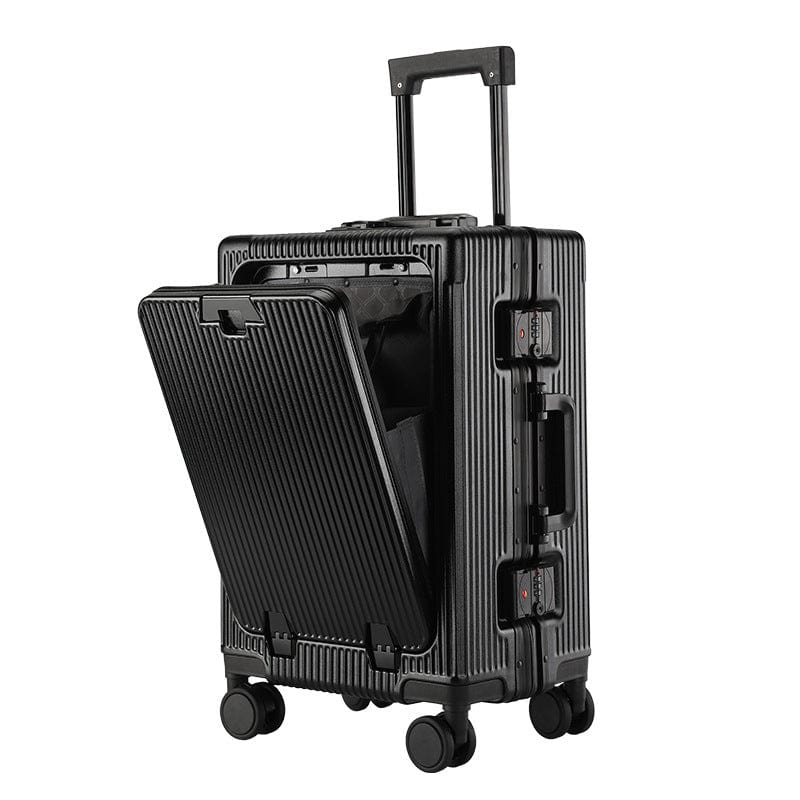
Compression Travel Backpack vs. Rolling Luggage: Which Wins?
| Compression Backpack | Rolling Carry-On | |
|---|---|---|
| Hands-free carry | Yes | No |
| Cobblestone / uneven terrain | Easy | Difficult |
| Overhead bin space | Less (can go under seat) | Requires overhead bin |
| Budget airline compliance | Often free (personal item) | Often charged (carry-on fee) |
| Capacity when expanded | 40–48L | 30–45L typical |
| Organization flexibility | Higher (multiple compartments) | Lower (open cavity) |
| Best for | City travel, active trips, transit-heavy routes | Business travel, resort trips, smooth-surface destinations |
For most independent travelers, a compression backpack wins. Rolling luggage earns its place on business trips to hotel-to-meeting routes, but the moment you're navigating public transit, uneven streets, or nature, a backpack outperforms it.
Frequently Asked Questions
What is a compression travel backpack used for?
A compression travel backpack is designed to reduce its packed volume, either through external straps or vacuum compression technology. The primary use case is air travel — compress the bag to meet personal item or carry-on size limits, then expand it at your destination for full packing capacity. They're also used to organize and stabilize loads for hiking, commuting, or longer trips.
Are compression travel backpacks allowed on planes?
Yes. A compression backpack is a standard travel bag — there's nothing about it that triggers additional airport security concern. In compressed state, it meets most airlines' personal item or carry-on dimensions. Always check your specific airline's current size requirements before flying.
How do I keep clothes wrinkle-free in a compression backpack?
Roll clothes instead of folding them before placing them in the compression chamber. Wrinkle-resistant fabrics like the Arca Mercerized Cotton T-Shirt are designed specifically for travel and come out of compression nearly press-ready. Hanging items for 20–30 minutes after arrival releases most remaining compression creases.
What's the best compression backpack for a week-long trip?
For a week-long trip, you need a bag that expands to at least 40L but compresses to carry-on or personal item size. The Arca Vacuum Compression Backpack (22L–48L) is purpose-built for exactly this use case, with security features included for international travel.
Can you fit a week's worth of clothes in a compression backpack?
Yes — that's the main use case. With vacuum compression, a 48L bag can hold 7–10 days of clothing for most travel styles. The key is packing strategically: versatile pieces that mix and match, rolled for compression, with bulky items (jackets, hoodies) going into the vacuum chamber first.
How is a compression travel backpack different from packing cubes?
Packing cubes are organization tools you place inside a regular backpack. A compression backpack integrates the compression mechanism into the bag itself — there's nothing extra to buy, carry, or manage. The space savings apply to the bag's overall footprint, which is what matters at the airport gate when a size gauge is involved.
The Bottom Line on Compression Travel Backpacks
A good compression travel backpack solves one of the most frustrating parts of modern air travel: fitting a real trip's worth of gear into a bag that qualifies as a personal item or carry-on. The technology is straightforward, and when the bag is built correctly — with proper security features, a real expandable range, and a laptop sleeve that doesn't require unpacking — it genuinely changes how you travel.
If you're ready to stop choosing between what you pack and what you pay, explore the full Arca travel backpack collection or go straight to the Vacuum Compression Backpack.
Arca Team
The Arca Official Team is a group of avid travelers and gear enthusiasts based between Vancouver, Canada and Buenos Aires, Argentina. Founded by two entrepreneurs who couldn't find affordable, quality travel gear, Arca Official has helped thousands of travelers pack smarter. Every article is researched and written by team members who test the gear themselves.