

Best Carry-On Backpack Under $100 (2026): Airline-Approved & Built to Last
Checked bag fees averaged $35–$70 each way on major US carriers in 2026 — meaning a round trip with a checked bag costs you $70–$140 before you even board the plane. On a two-trip year, that's $280 in bag fees alone. A quality carry-on backpack under $100 pays for itself on the first flight.
But here's where most travelers get burned: they buy the cheapest backpack they can find, spend a vacation wrestling with broken zippers or straps that dig in after an hour, and swear off carry-on-only travel for good. The problem isn't the strategy — it's buying the wrong bag.
The right carry-on backpack under $100 is one that's genuinely airline-compliant, actually fits your stuff for a week on the road, and holds up past the first trip. This guide breaks down exactly what to look for, the airline size rules that actually matter, and the best options available right now — including Arca's carry-on backpacks designed specifically for travelers who want quality without the premium-brand markup.
Why a Carry-On Backpack Is Worth It in 2026
The math has never been more compelling. Between rising bag fees, tighter airline policies on oversized carry-ons, and the time lost at baggage claim, one-bag travel is no longer just for minimalists — it's for anyone who values their time and money.
Beyond the financial argument, a well-packed carry-on backpack forces you to travel lighter — and lighter travel is genuinely better travel. You move faster through airports, hop on transit without planning around luggage storage, and arrive with everything you need and nothing you don't.
The sweet spot for carry-on backpacks: 30–45 liters. Large enough to hold a week's worth of clothes and a laptop, small enough to fit in every overhead bin (and under the seat in front of you on budget carriers).
What to Look for in a Carry-On Backpack Under $100
At the sub-$100 price point, some compromises are unavoidable — but there are a few non-negotiables that separate a bag worth buying from one that'll fail you mid-trip.
Non-Negotiable Features
- Airline-compliant dimensions — the bag must fit within major airline overhead bin limits (most US carriers: 22" x 14" x 9"). Verify the actual dimensions, not just the claimed capacity.
- Laptop compartment — a dedicated, padded sleeve for a 15" laptop that's separate from your main packing space. Not a sleeve inside the main compartment — a real dedicated pocket.
- Clamshell or panel opening — a bag that opens flat (like a suitcase) is dramatically easier to pack and get through TSA than a top-loader.
- Padded hip belt or sternum strap — even a thin padded strap makes a full pack manageable over long airport walks. A bag without any hip or sternum support gets painful fast.
- Water-resistant exterior — budget carries don't include rain covers, so the bag itself needs to resist light rain and spills.
- Compression straps — external straps that cinch down the main compartment keep the bag from bulging out when it's not completely full.
Nice-to-Have (But Worth Prioritizing)
- USB charging port / power bank pass-through
- Side water bottle pocket accessible while wearing the bag
- Hidden security pocket on the back panel
- Luggage pass-through strap for attaching to a rolling suitcase
One feature you'll find on most budget bags that's essentially worthless: the external "hydration port" on bags not designed for hydration bladders. If the bag doesn't have a bladder sleeve inside, the port is just a hole in your zipper.
Best Carry-On Backpacks Under $100 in 2026
Most backpacks labeled "carry-on" in this price range fall into one of two failure modes: they're technically airline-sized but too small to be useful (under 25L), or they're the right size but constructed poorly enough that they don't survive a full travel season. Here's what actually stands out.
Best for Frequent Flyers: 40L Carry-On with Laptop Compartment
Arca Carry-On Travel Backpack 40L
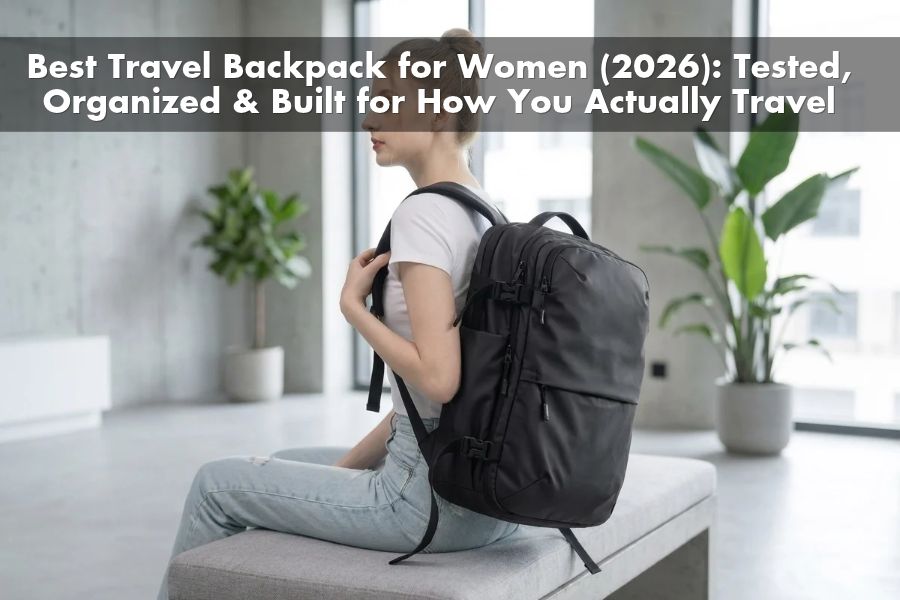
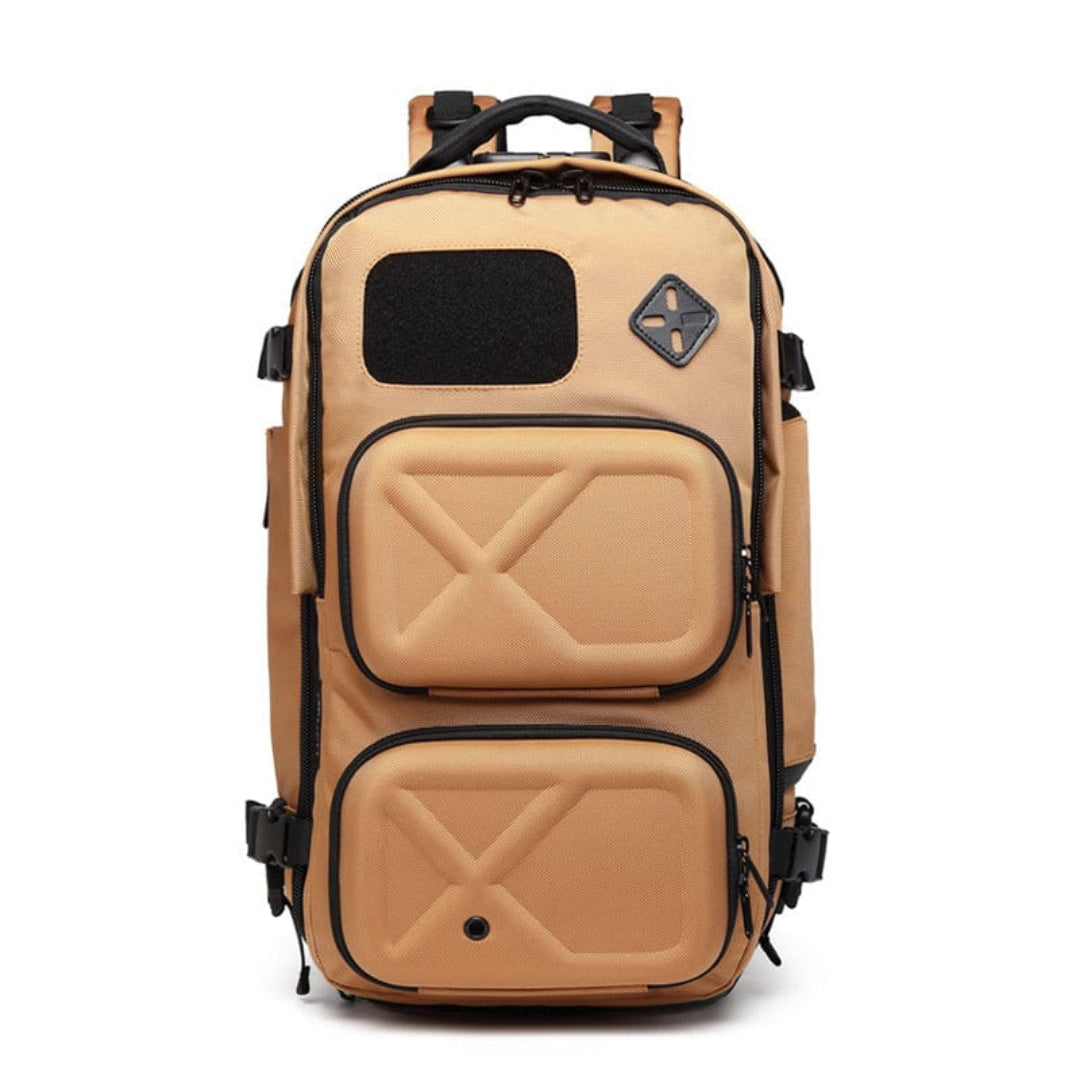
40L capacity in airline-compliant dimensions. Clamshell opening, dedicated 15" laptop sleeve, padded back panel with airflow channels, compression straps, USB charging port, and water-resistant shell. Built for the traveler who needs to get from New York to LA and back without checking a bag — at a price that doesn't require budgeting for the bag itself.
Shop Carry-On Backpacks →What separates Arca's carry-on backpacks from comparably priced options is the clamshell design — most bags under $100 open from the top, which means unpacking half the bag to find your laptop cable at the bottom. The flat-open design means you pack it like a suitcase and access it like one at TSA. The 1-year warranty on manufacturing defects is rare at this price point and covers the components most likely to fail first: zippers and strap attachments.
Best for Budget Airlines: Personal Item–Sized Carry-On
If you're flying Spirit, Frontier, or Allegiant — carriers that charge for overhead bin bags but allow free personal items — you need a slightly smaller profile: typically under 18" x 14" x 8". A 20–25L compact travel backpack in this range fits under the seat in front of you and avoids the personal item fee entirely.
The trade-off is capacity: at 20–25L, you're packing for 3–4 days maximum unless you're an experienced minimalist packer. For longer trips on budget carriers, a personal-item bag paired with strategic packing (rolling vs. folding, packing cubes, wearing your bulkiest layer on the plane) gets you surprisingly far.
Best for One-Bag Long-Term Travel: 40L+ with Organizational System
For travelers doing 1–4 week trips out of a single bag, organizational pockets matter as much as raw capacity. Look for bags with a structured front organizer (pen slots, key clip, card pockets), a dedicated laptop compartment accessible without opening the main compartment, and side pockets deep enough to hold a 32oz water bottle without tilting.
Pair any carry-on backpack with packing cubes and compression accessories and you can fit a genuinely surprising amount into a 40L pack — comfortably within airline limits.
Airline Size Requirements: What "Carry-On Compliant" Actually Means
This is where most people get caught out. "Carry-on compliant" means different things on different airlines — and the gap between the most and least generous policies is significant. A bag that fits in a Delta overhead bin might technically be too large for a Spirit personal item.
| Airline | Carry-On Max Size | Personal Item Max | Carry-On Fee |
|---|---|---|---|
| Delta | 22" × 14" × 9" | 18" × 14" × 8" | Free (most fares) |
| United | 22" × 14" × 9" | 17" × 10" × 9" | Free (most fares) |
| American | 22" × 14" × 9" | 18" × 14" × 8" | Free (most fares) |
| Southwest | 24" × 16" × 10" | 18.5" × 8.5" × 13.5" | Free (all fares) |
| Spirit | 22" × 18" × 10" | 18" × 14" × 8" | $79–$99 at gate |
| Frontier | 24" × 16" × 10" | 18" × 14" × 8" | $40–$99 at gate |
The safe target for a bag that works on every major US carrier: 22" × 14" × 9" or smaller. This fits the most restrictive standard (Delta, United, American) and sails through Southwest and the budget carriers. Anything larger is a gamble on gate-check policies, which vary by how full the flight is and who's working the gate.
One important note: dimensions on backpack product pages often reflect the unloaded bag. A 40L pack with a flexible structure can compress to fit even if its nominal measurements suggest otherwise. When in doubt, check if the bag has compression straps — those let you cinch it down before boarding.
For a deep dive on what to expect specifically on American Airlines routes, our American Airlines carry-on guide covers exactly what flies and what gets gate-checked.
How to Pack a Carry-On Backpack for a Week-Long Trip
Packing a 40L backpack for 7 days isn't about having a smaller wardrobe — it's about packing smarter. With the right system, a week fits comfortably and you'll still have room for what you pick up along the way.
🎽 Clothing (7 days)
- 5 tops (mix of casual + one nicer option)
- 3 bottoms (pants or shorts that mix and match)
- 7 pairs underwear + socks
- 1 lightweight jacket or layer
- Shoes worn on the plane (+ 1 pair packed)
💻 Tech + Essentials
- Laptop + charger (dedicated sleeve)
- Phone + cable
- Power bank
- Universal adapter
- Earbuds / headphones
- Passport + travel docs (front pocket)
🧴 Toiletries
- Toiletry bag (100ml TSA-compliant bottles)
- Solid shampoo / conditioner bar (saves space)
- Deodorant, toothbrush, razor
- Medications if needed
📦 Packing Strategy
- Roll clothes (not fold) — saves 30% space
- Use packing cubes to compress and organize
- Heaviest items closest to your back
- Wear your bulkiest shoes and jacket on the plane
The rule that changes everything: Plan your outfits before you pack, not during. When you lay out exactly what you'll wear each day, you almost always discover 3–4 items you were going to pack "just in case" that you can leave behind.
Frequently Asked Questions
What size backpack counts as a carry-on?
On most major US airlines (Delta, United, American), the standard carry-on size limit is 22" × 14" × 9" (including handles and wheels). Southwest is slightly more generous at 24" × 16" × 10". Budget carriers like Spirit and Frontier allow similar carry-on sizes but charge significant fees ($40–$99) for overhead bin access — making the personal item limit (typically 18" × 14" × 8") the more useful measurement if you want to fly truly free. A bag in the 35–45L range typically fits within standard carry-on limits as long as it's not overstuffed — compression straps help ensure it fits even on a full pack.
Can a 40L backpack fit as a carry-on?
Yes — a 40L backpack designed with carry-on travel in mind fits within the standard US airline carry-on limit of 22" × 14" × 9". The key is the actual dimensions of the bag, not just the liter capacity. Some 40L bags are tall and narrow (carry-on friendly), while others are wide and deep (harder to fit). Look for bags specifically marketed as "carry-on compliant" and check the actual dimensions rather than just the volume. Compression straps also help compress the bag to fit more easily in overhead bins, especially when it's fully packed.
Is a backpack or rolling suitcase better as a carry-on?
It depends on your trip. A rolling carry-on is better if: you're mostly in hotels with elevators, you're dressing for business, or you need to maximize capacity. A backpack carry-on is better if: you're taking public transit, navigating cobblestones, doing multi-city trips, or moving frequently between accommodations. For most leisure travelers, especially those mixing cities with outdoor activities, a backpack wins on flexibility. You can't roll a suitcase through a cobblestone street in Rome or carry it up a hostel staircase — a well-organized travel backpack handles both.
What's the best carry-on backpack for budget airline travel?
For budget airline travel (Spirit, Frontier, Allegiant), the goal is to fit within the personal item dimensions (typically 18" × 14" × 8") rather than the carry-on limit, since most budget carriers charge $40–$99 for overhead bin access but allow personal items for free. A 20–25L compact travel backpack fits under the seat and avoids all fees. If you need to pack for longer trips, a bag that compresses to personal-item size when partially packed — or one you're willing to pay the overhead fee for on budget routes — gives you the most flexibility. Check each airline's current policy before you fly, as budget carrier fees change frequently.
Final Thoughts
The best carry-on backpack under $100 isn't the cheapest option — it's the one that hits all the fundamentals: airline-compliant dimensions, genuine organization, laptop protection, and construction that holds up past the first trip. At this price point, those features exist. You just have to know where to look.
Skip the bag fees. Skip the baggage claim. And stop paying $150–$225 for a brand name when the features you actually need are available for under $100 from brands building for the same traveler — just without the premium markup.
Arca's carry-on backpacks are designed around the reality of how people actually travel: flights where every inch counts, layovers where you need your laptop out fast, and trips where one bag has to do it all from the airport to the hotel to the day's itinerary. Quality construction, airline-compliant sizing, and practical features — backed by a 1-year warranty — for the traveler who doesn't want to compromise on either.
Stop Paying for Bags You Don't Have to Check
Arca's carry-on backpacks fit in every major US airline overhead bin — 40L of organized packing space, laptop protection, and water-resistant construction. Under $100, with a 1-year warranty included.
Shop Carry-On Backpacks →Arca Team
The Arca Official Team is a group of avid travelers and gear enthusiasts based between Vancouver, Canada and Buenos Aires, Argentina. Founded by two entrepreneurs who couldn't find affordable, quality travel gear, Arca Official has helped thousands of travelers pack smarter. Every article is researched and written by team members who test the gear themselves.